

3 min read
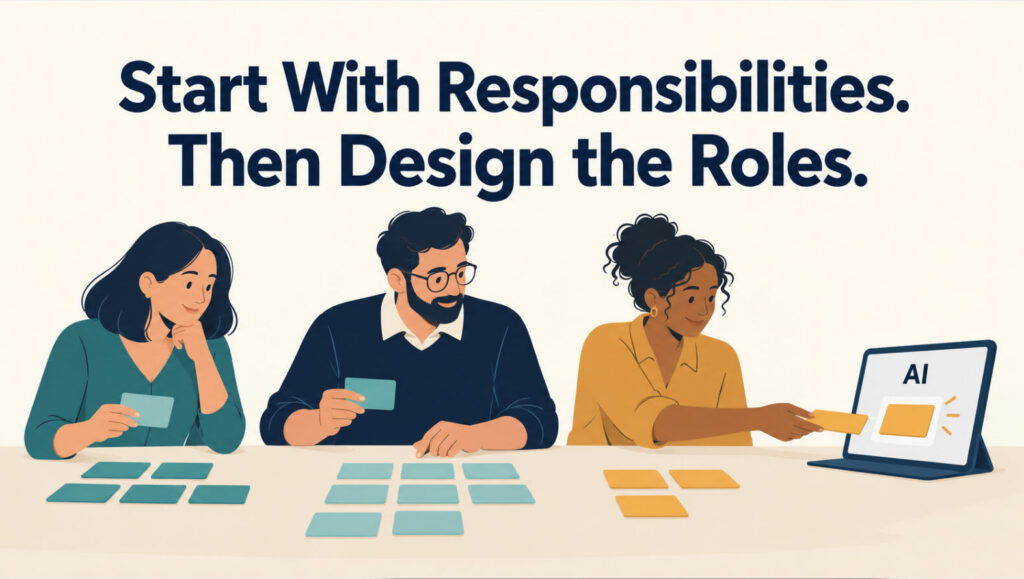
When discussing organization design, I tend to start with a simple question: what responsibilities must be covered for the work to succeed?
From there, we can identify the capabilities needed, who can provide them, and whether they have enough capacity. Titles help describe how we organize those responsibilities, but a title alone tells us very little about whether the work is adequately covered.
How much an organization can support specialized roles depends partly on its size, available funding, and investment priorities. Smaller or more constrained organizations often combine responsibilities into broader roles, while those with sufficient resources and demand can distribute them across specialists.
We call this wearing multiple hats. It can be necessary and effective, but the responsibilities don’t disappear because we cannot afford a dedicated person for each one. They still consume time, attention, and judgment, and require the capabilities and capacity to perform them well.
This has come up recently in conversations about the responsibilities of a technical project manager and the expectations of a vice president of Product.
A Product leader may be responsible for strategy, customer understanding, discovery, prioritization, developing the Product team, and evaluating business outcomes. In a smaller organization, that same person may also coordinate delivery, follow up on dependencies, maintain schedules, prepare status reports, and respond to requests throughout the day.
Adding a technical project manager can provide focused coordination and communication capacity. But we need to be explicit about what transfers and what remains. Product still needs to make priority decisions, weigh commitments against available capacity, and explain the business outcomes it expects. Engineering still needs to own technical decisions and delivery forecasts.
Hiring someone to coordinate the work does not automatically resolve unclear Product expectations. Nor does it create more engineering capacity.
Before judging whether someone is meeting expectations, I want to understand what we have asked them to carry, whether they have the capabilities and authority to do it, and what comes off their plate when we add support.
Capability and capacity are different. A person may know how to perform every responsibility assigned to them and still lack the time and attention to perform them well.
Specialization can help people focus and reduce the cognitive load of continually moving beyond their area of expertise. It can also introduce more handoffs and dependencies. The objective is to find a sustainable distribution of responsibilities for the organization’s circumstances.
AI adds another option to that design.
Richard Allan, author of User Needs Mapping: Aligning Teams Around What Matters, recently posed a question closely tied to this LinkedIn discussion: “When AI changes a capability, what happens to the team?” Through an example of AI-assisted customer support investigation, he explores agency within a role, including what AI is authorized to do and decide, and how that changes responsibilities, team interactions, dependencies, and cognitive load.
My interpretation is that the investigation responsibility remains. AI performs work previously handled by a frontend or backend engineer. A handoff also remains: the support agent delegates the investigation to AI and reviews what it returns.
That may reduce the wait for another team and speed up that stage of the workflow. It also creates a need to understand who reviews the findings, handles exceptions, and remains accountable for the response.
Looking at AI as another contributor makes the redistribution easier to see. We can identify the specific responsibilities it can perform and examine how that changes the work of the people around it.
The organizational design question remains familiar: have we covered the necessary responsibilities with sufficient capability, capacity, and clear ownership?
Whether we add a specialist, redistribute work, or introduce AI, we should be able to explain what changes, what remains, and how we will know the arrangement is working.